If you've ever stared at a Spanish word, pen hovering, wondering if it needs that little mark—the tilde—you're not alone. The Uso de Tildes y Acentos in Spanish isn't just a quirky grammatical detail; it's the very heartbeat of clear communication, the subtle director of pronunciation, and the silent arbiter of meaning. Without them, "I speak" becomes "he spoke," "my father" turns into "the potato," and confusion reigns.
Mastering Spanish accentuation rules, or acentuación, is less about memorizing endless exceptions and more about understanding a handful of logical principles. Think of it as learning the secret code that unlocks not just correct spelling, but authentic pronunciation and unwavering clarity. Let's decode it together.
At a Glance: Your Tilde Toolbox
- Stress vs. Mark: An "acento" is the natural stress on a syllable; a "tilde" (or acento ortográfico) is the written mark.
- Three Key Steps: Identify syllables, find the stressed syllable (sílaba tónica), and classify the word.
- Word Types: Agudas (last syllable stress), Llanas (penultimate), Esdrújulas (antepenultimate), Sobreesdrújulas (before antepenultimate).
- The Golden Rules: Agudas (ends in N, S, or vowel), Llanas (doesn't end in N, S, or vowel), Esdrújulas/Sobreesdrújulas (always).
- Diacritical Tilde: Changes meaning for identical-sounding words (e.g., él vs. el).
- Hiato Power: Tildes can break a vowel blend to create separate syllables.
The Subtle Power of Spanish Accents: More Than Just a Mark
Before we dive into the rules, let's clarify a fundamental distinction: acento versus tilde. In English, we often use "accent" to refer to a speaker's pronunciation style. In Spanish, "acento" primarily means stress. Every word in Spanish has an acento prosódico, an inherent stress on one of its syllables. This is the syllable you naturally emphasize when you say the word aloud.
The tilde, on the other hand, is the physical written mark (´) placed over a vowel. This is what Spanish speakers call an acento ortográfico or acento gráfico. Not every stressed syllable gets a tilde, but every tilde indicates a stressed syllable. The tilde is a beacon, guiding both pronunciation and meaning.
Why does this matter so much? Because Spanish is a largely phonetic language, and the tilde tells you exactly how to pronounce a word, often differentiating between words that are spelled identically but have different meanings or grammatical functions. Consider these powerful shifts:
- Sé (I know) vs. Se (reflexive pronoun)
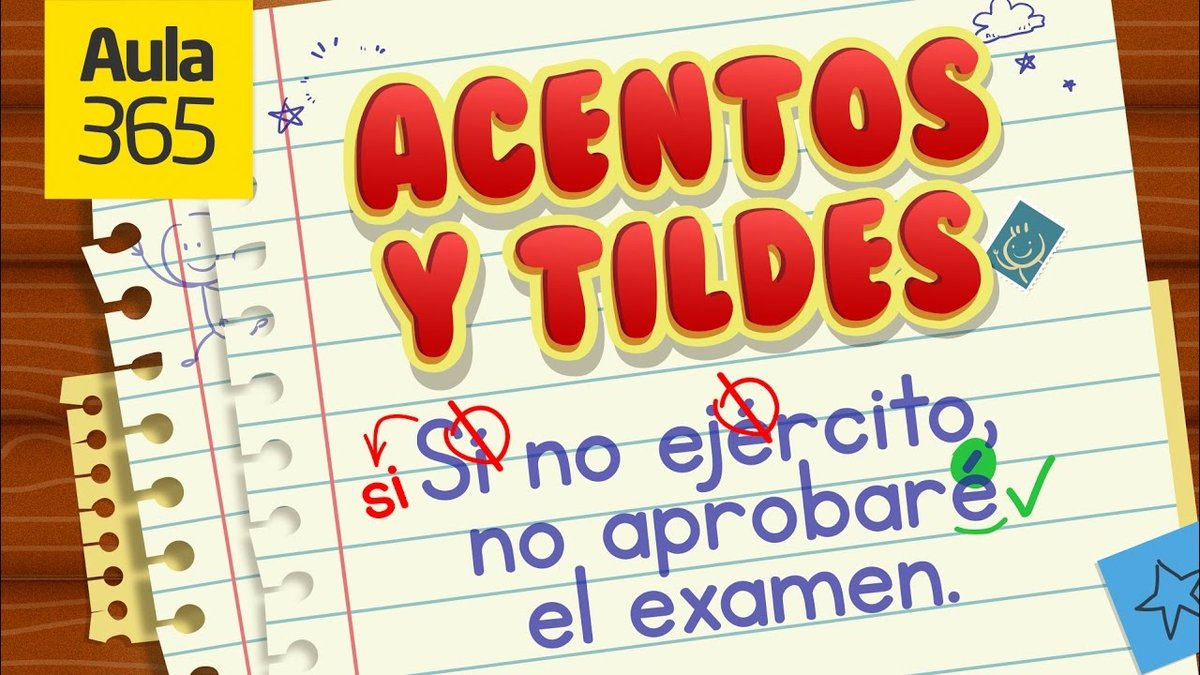
- Sí (yes) vs. Si (if)
- Público (public, noun) vs. Publico (I publish, verb) vs. Publicó (he/she/it published, verb)
Without the tilde, Spanish becomes a minefield of ambiguity. Mastering its use isn't just about correctness; it’s about clarity, precision, and communicating with the confidence of a native speaker.
Your Three Steps to Tilde Mastery
The path to correctly applying tildes in Spanish can be broken down into a straightforward, three-step process. Each step builds on the last, guiding you from a simple word to a confident decision about accentuation.
Step 1: Divide and Conquer – Breaking Words into Syllables
While not strictly necessary for every word, being able to mentally (or physically) divide a word into syllables is the foundational skill. This helps you isolate the individual sound units and, crucially, identify where the natural stress falls.
Quick Tips for Syllable Division:
- Consonant-Vowel: A consonant usually goes with the following vowel (e.g., ca-sa).
- Two Consonants: If two consonants are together, they usually separate (e.g., es-pe-jo), unless they form a common blend like
pr,cl,tr(e.g., a-brir, re-gla). - Vowel Blends (Diphthongs/Triphthongs): Strong vowels (a, e, o) and weak vowels (i, u) often stick together. (e.g., ai-re, len-gua).
- Hiato: When two strong vowels are together, or a strong vowel and a stressed weak vowel, they usually separate (e.g., te-a-tro, pa-ís). We'll come back to this important concept later.
Step 2: Unearthing the Sílaba Tónica – Where the Stress Lies
The sílaba tónica is the stressed syllable, the one that naturally carries more vocal force when you pronounce a word. In most cases, you can hear it. Say a word aloud and listen for which syllable "pops" out.
For example, say "computadora." You'll notice the "do" syllable stands out: com-pu-ta-do-ra.
Try "mesa": me-sa.
Try "teléfono": te-lé-fo-no.
This auditory identification is key. If you're unsure, try pronouncing the word by emphasizing each syllable in turn. The one that sounds most natural is your sílaba tónica.
Step 3: Classify Your Word – Agudas, Llanas, Esdrújulas, and Sobreesdrújulas
Once you've identified the sílaba tónica, the next step is to classify the word based on its position. This classification is the cornerstone of Spanish accentuation rules. Remember, you count syllables from the end of the word, backwards.
- Agudas (Oxytone): The sílaba tónica is the last syllable.
- Examples: café (ca-fé), hablar (ha-blar), Madrid (Ma-drid), canción (can-ción)
- Llanas / Graves (Paroxytone): The sílaba tónica is the second-to-last (penultimate) syllable.
- Examples: mesa (me-sa), casa (ca-sa), árbol (ár-bol), examen (e-xa-men)
- Esdrújulas (Proparoxytone): The sílaba tónica is the third-to-last (antepenultimate) syllable.
- Examples: teléfono (te-lé-fo-no), médico (mé-di-co), brújula (brú-ju-la)
- Sobreesdrújulas (Superproparoxytone): The sílaba tónica is before the third-to-last syllable (i.e., fourth-to-last or earlier). These are less common and often adverbs or commands with attached pronouns.
- Examples: rápidamente (rá-pi-da-men-te), tráemelo (trá-e-me-lo), cómpramelo (cóm-pra-me-lo)
By following these three steps, you've done the heavy lifting. Now, let's apply the simple rules that tell you when to add that all-important tilde.
The Four Golden Rules of Tildes (and Their Exceptions)
This is where the magic happens. Based on your word classification, these rules will tell you definitively whether a tilde is needed. And here's the best part: the rules for agudas and llanas are direct opposites, making them easier to remember.
1. Agudas: The Last Syllable Takes the Stage
Words whose stress falls on the last syllable only carry a tilde if they end in:
- -N
- -S
- Vowel (a, e, i, o, u)
Examples: - Termina en N:
- Canción (can-ción) – Yes, ends in N.
- Camión (ca-mión) – Yes, ends in N.
- También (tam-bién) – Yes, ends in N.
- Termina en S:
- Autobús (au-to-bús) – Yes, ends in S.
- Después (des-pués) – Yes, ends in S.
- Compás (com-pás) – Yes, ends in S.
- Termina en Vowel:
- Café (ca-fé) – Yes, ends in E.
- Mamá (ma-má) – Yes, ends in A.
- Colibrí (co-li-brí) – Yes, ends in I.
When Agudas Don't Get a Tilde:
If an aguda word ends in any consonant other than N or S, or if it ends in S but is preceded by another consonant (e.g., robots), it does not get a tilde. - Hablar (ha-blar) – Ends in R, no tilde.
- Ciudad (ciu-dad) – Ends in D, no tilde.
- Reloj (re-loj) – Ends in J, no tilde.
- Amistad (a-mis-tad) – Ends in D, no tilde.
- Robots (ro-bots) - Ends in
ts(consonant + s), no tilde.
2. Llanas (Graves): The Penultimate Syllable Steals the Show
Words whose stress falls on the second-to-last syllable follow the exact opposite rule of agudas. They carry a tilde if they do not end in:
- -N
- -S
- Vowel (a, e, i, o, u)
Examples: - No termina en N, S, o Vowel:
- Árbol (ár-bol) – Ends in L, gets a tilde.
- Fácil (fá-cil) – Ends in L, gets a tilde.
- Lápiz (lá-piz) – Ends in Z, gets a tilde.
- Cráter (crá-ter) – Ends in R, gets a tilde.
When Llanas Don't Get a Tilde:
If a llana word ends in N, S, or a vowel, it does not get a tilde. This covers the vast majority of Spanish words. - Casa (ca-sa) – Ends in A, no tilde.
- Mesa (me-sa) – Ends in A, no tilde.
- Examen (e-xa-men) – Ends in N, no tilde.
- Problemas (pro-ble-mas) – Ends in S, no tilde.
Notice the beauty in this opposition: learn one, and you've essentially learned the other!
3. Esdrújulas: Always a Tilde, No Exceptions
This is the easiest rule of all. Words whose stress falls on the third-to-last syllable always carry a tilde. No exceptions, no conditions.
Examples:
- Teléfono (te-lé-fo-no) – Always tilde.
- Médico (mé-di-co) – Always tilde.
- Pájaro (pá-ja-ro) – Always tilde.
- Sábado (sá-ba-do) – Always tilde.
- Bolígrafo (bo-lí-gra-fo) – Always tilde.
If you can identify an esdrújula word, you know it needs a tilde.
4. Sobreesdrújulas: Always a Tilde, Like Their Cousins
Similar to esdrújulas, words whose stress falls on a syllable before the third-to-last (fourth-to-last or earlier) always carry a tilde. These are often compound forms, such as verbs with attached pronouns or adverbs ending in -mente.
Examples:
- Tráemelo (trá-e-me-lo) – Always tilde.
- Dígamelo (dí-ga-me-lo) – Always tilde.
- Cómpramelo (cóm-pra-me-lo) – Always tilde.
- Rápidamente (r��-pi-da-men-te) – Always tilde (the original word rápida was esdrújula, and it maintains its tilde).
These four rules form the backbone of Spanish accentuation. Master them, and you've conquered the vast majority of tilde usage. To really reinforce your understanding of these core principles, practice applying them to different words. You might find it helpful to review foundational grammar concepts to strengthen your overall written accuracy. How to write correctly often includes an understanding of these building blocks.
Beyond the Core: Special Cases and Nuances
While the four golden rules cover most scenarios, Spanish has a few special cases where tildes serve different purposes, primarily to differentiate words that would otherwise be identical.
The Diacritical Tilde (Tilde Diacrítica): Changing Meaning with a Mark
The tilde diacrítica is perhaps the most fascinating use of the accent mark. It's used to distinguish pairs of words that are spelled and pronounced identically but have different grammatical functions or meanings. These are almost exclusively monosyllabic words (one syllable), which generally do not take tildes under the regular rules.
Here are the most common tilde diacrítica pairs you'll encounter:
- él (he, him) vs. el (the, masculine singular definite article)
- Él es mi hermano. (He is my brother.)
- El coche es rojo. (The car is red.)
- tú (you, informal singular pronoun) vs. tu (your, informal singular possessive adjective)
- Tú eres inteligente. (You are intelligent.)
- Tu libro es interesante. (Your book is interesting.)
- mí (me, object pronoun) vs. mi (my, possessive adjective; also a musical note)
- A mí me gusta el café. (I like coffee.)
- Mi casa es grande. (My house is big.)
- sí (yes; self, emphatic) vs. si (if; musical note)
- Sí, quiero ir. (Yes, I want to go.)
- Si llueve, no salgo. (If it rains, I won't go out.)
- té (tea, noun) vs. te (you, object pronoun)
- Quiero una taza de té. (I want a cup of tea.)
- Te veo mañana. (I'll see you tomorrow.)
- más (more, quantity) vs. mas (but, conjunction, less common than pero)
- Quiero más agua. (I want more water.)
- Estaba cansado, mas no se rindió. (He was tired, but he didn't give up.)
- aún (still, yet) vs. aun (even, including)
- Aún no ha llegado. (He still hasn't arrived.)
- Aun los niños lo entendieron. (Even the children understood it.)
- dé (from the verb dar, to give) vs. de (of, from, preposition)
- Espero que me dé un regalo. (I hope he gives me a gift.)
- Soy de España. (I am from Spain.)
- sé (from the verbs saber (to know) or ser (to be)) vs. se (reflexive pronoun; impersonal pronoun)
- Yo no sé la respuesta. (I don't know the answer.)
- Sé bueno. (Be good.)
- Se lo di a ella. (I gave it to her.)
Important Note on Solo and Demonstratives:
The Real Academia Española (RAE) historically allowed the tilde diacrítica on solo (only/alone) and demonstrative pronouns (este, ese, aquel and their feminine/plural forms) when they could be confused with their adverbial or adjectival counterparts. However, since 2010, the RAE recommends not using the tilde in these cases, stating that context usually clarifies meaning. While you might still see it in older texts, modern Spanish generally avoids it.
Interrogative and Exclamatory Words: Asking and Exclaiming with Force
Words like qué, quién, cómo, cuándo, dónde, cuánto, cuál always carry a tilde when they are used in direct or indirect questions or exclamations. This tilde distinguishes them from their unstressed, non-interrogative/exclamatory counterparts.
Examples:
- Qué:
- ¿Qué hora es? (What time is it?)
- ¡Qué bonito! (How beautiful!)
- No sé qué hacer. (I don't know what to do – indirect question)
- Quiero que vengas. (I want you to come – conjunction)
- Quién:
- ¿Quién es él? (Who is he?)
- No sé con quién iré. (I don't know who I will go with – indirect question)
- Cómo:
- ¿Cómo estás? (How are you?)
- ¡Cómo corre! (How he/she runs!)
- Cuándo:
- ¿Cuándo llegas? (When do you arrive?)
- Recuerdo cuando era niño. (I remember when I was a child – conjunction)
- Dónde:
- ¿Dónde vives? (Where do you live?)
- Fue a donde le dijiste. (He/she went where you told him/her – adverb)
- Cuánto:
- ¿Cuánto cuesta? (How much does it cost?)
- Trabaja cuanto puede. (He/she works as much as he/she can – adverb)
- Cuál:
- ¿Cuál prefieres? (Which do you prefer?)
- La casa la cual compré. (The house which I bought – relative pronoun)
Hiato vs. Diptongo: Vowel Power Plays
Understanding diphthongs (diptongos) and hiatuses (hiatos) is crucial because they directly impact syllable division and, consequently, accentuation.
- Diptongo: Two vowels that form a single syllable. This occurs when:
- A strong vowel (a, e, o) and a weak vowel (i, u) are together, with the stress on the strong vowel (e.g., ai-re, cau-sa, cie-lo).
- Two weak vowels are together (e.g., ciu-dad, rui-do).
- Rule: If a tilde is placed according to the general rules, it goes on the strong vowel (e.g., canción, después).
- Hiato: Two vowels that form separate syllables. This occurs when:
- Two strong vowels are together (e.g., te-a-tro, le-er).
- A strong vowel and a weak vowel are together, but the stress falls on the weak vowel, thus breaking the natural diphthong. This always requires a tilde on the weak vowel, regardless of the general accentuation rules, to force the separate syllables. This is often called a "ruptura del diptongo" (diphthong break).
- Examples: país (pa-ís), oído (o-í-do), baúl (ba-úl), maíz (ma-íz), frío (frí-o), caída (ca-í-da).
- Rule: A tilde is always placed on the weak vowel (i or u) in a hiato to indicate that it forms its own syllable and breaks what would otherwise be a diphthong. This tilde takes precedence over all other general rules.
This hiato rule is a common source of error for learners, but once understood, it's very consistent.
Adverbs Ending in -mente: Inheriting the Tilde
Adverbs formed by adding the suffix -mente to an adjective follow a specific rule: they retain the tilde if the original adjective had one.
- Rápida (quick) → Rápidamente (quickly)
- Fácil (easy) → Fácilmente (easily)
- Lenta (slow) → Lentamente (slowly - no tilde on lenta, so no tilde on lentamente)
Compound Words and Monosílabos
- Compound Words: The RAE rules for compound words can be complex, but generally, a compound word follows the accentuation rules as if it were a single word. If two words are joined to form a new one, the first word often loses its tilde if it had one, and the new compound word is accentuated according to the general rules (e.g., décimo + séptimo → decimoséptimo).
- Monosílabos: Single-syllable words (like sol, mar, pan, fe, fue, dio) generally do not carry a tilde, unless they are part of the tilde diacrítica pairs discussed above.
Common Missteps and How to Sidestep Them
Even with the rules laid out, certain patterns of error tend to trip up learners. Being aware of these common pitfalls can help you avoid them.
- Forgetting the Sílaba Tónica is Paramount: The most frequent mistake is jumping straight to the "ends in N, S, or vowel" rule without first identifying the stressed syllable. Always, always, start with finding the sílaba tónica.
- Confusing Agudas and Llanas Rules: It's easy to swap the rules between these two categories. Remember: Agudas get a tilde if they end in N, S, or vowel. Llanas get a tilde if they do NOT end in N, S, or vowel. They are mirror images!
- Overlooking Tildes Diacríticas: These little marks are small but mighty. Missing them changes meaning. Pay special attention to the common pairs like tu/tú, el/él, mi/mí.
- Mistaking Diptongos for Hiatos (and vice versa): This is where vowel combinations can be tricky. If you have a strong vowel (a, e, o) and a weak vowel (i, u), assume it's a diphthong unless the stress clearly falls on the weak vowel, forcing a hiato and requiring a tilde. Think país vs. causa.
- Applying English Accentuation Habits: English stress is often unpredictable and doesn't have a consistent written mark like the tilde. Resist the urge to guess based on how you might stress an English word. Trust the Spanish rules.
The key to overcoming these challenges is consistent practice and a methodical approach. Don't rush; take each word through the three steps and apply the rules deliberately.
Your Blueprint for Confident Spanish Writing
Mastering the Uso de Tildes y Acentos is a journey, not a destination. It requires attention, practice, and a willingness to understand the underlying logic rather than just rote memorization. But the reward is immense: the ability to write and pronounce Spanish with accuracy, clarity, and confidence.
Here's your actionable blueprint to solidify your tilde skills:
- Always Start with Pronunciation: Say the word aloud. Identify the sílaba tónica (stressed syllable). This is your compass.
- Count from the End: Once you have the sílaba tónica, count back from the last syllable to classify the word as aguda, llana, esdrújula, or sobreesdrújula.
- Apply the Core Rule:
- Agudas: Tilde if ends in N, S, or vowel.
- Llanas: Tilde if doesn't end in N, S, or vowel.
- Esdrújulas / Sobreesdrújulas: Always tilde.
- Check for Special Cases:
- Diacritical Tildes: Is it one of the common monosyllabic pairs that changes meaning with a tilde?
- Interrogative/Exclamatory: Is it qué, cómo, cuándo, etc., in a question or exclamation?
- Hiatos: Are there two vowels that should be separate syllables, especially if the stress falls on a weak 'i' or 'u'? If so, add the tilde to the weak vowel.
- Read, Read, Read: Immerse yourself in well-written Spanish texts. Pay attention to where tildes appear and try to understand why. This passive learning will slowly build your intuition.
- Practice, Practice, Practice: Consciously apply these rules every time you write in Spanish. Start with simple words and gradually move to more complex ones.
Remember, every correctly placed tilde is a testament to your understanding and respect for the Spanish language. It’s a small mark that makes a world of difference. Keep practicing, and soon, placing that tilde will feel as natural as speaking itself.