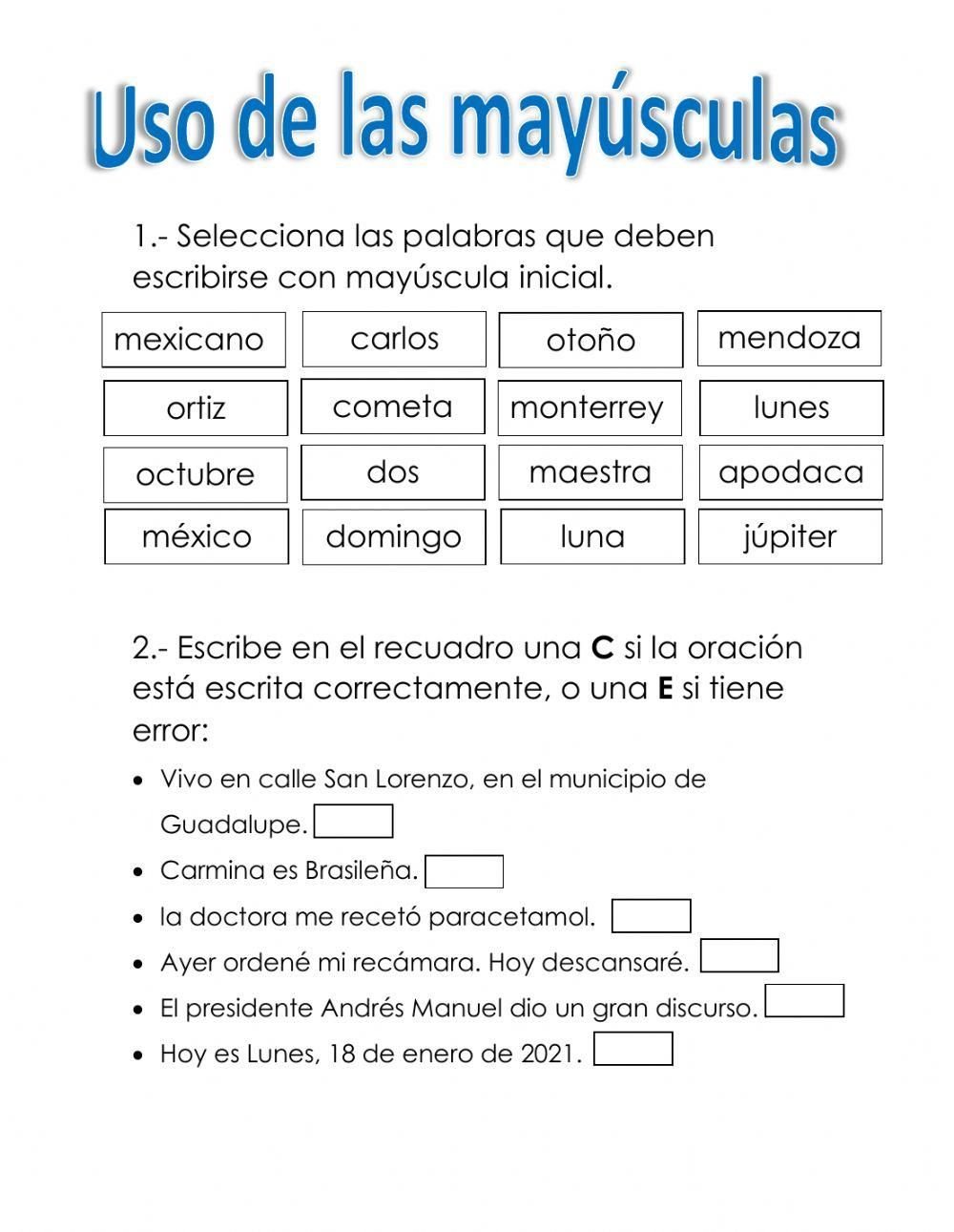
Capitalization in English isn't just a quaint grammatical formality; it's a powerful tool that shapes meaning, signals importance, and fundamentally impacts how professionally your writing is perceived. Misplaced capitals can make your text look sloppy, while strategic use ensures clarity, authority, and readability. Whether you're crafting an urgent email, a formal report, or a compelling blog post, understanding the nuances of capitalization—or "Uso de Mayúsculas y Minúsculas" as it's known in Spanish—is non-negotiable for anyone striving for excellence in English communication.
Think of capitalization as a set of traffic signals for your reader. It tells them where a new thought begins, what's a proper name versus a general concept, and which words in a title carry the most weight. Getting these signals right ensures a smooth journey for your audience, free from confusion and distraction.
At a Glance: Your Capitalization Checklist
- Start Strong: Always capitalize the first word of every sentence and direct quote.
- Name What's Unique: Capitalize all proper nouns—names of people, places, organizations, specific events, and brands.
- Own "I": The pronoun "I" is always capitalized.
- Title Smart: For titles of books, articles, songs, etc., capitalize the first word, the last word, and all major words (nouns, verbs, adjectives, adverbs, pronouns).
- Days, Months, Holidays: Always capitalize these. (But not seasons!)
- Acronyms & Roman Numerals: Generally capitalized.
- Job Titles: Capitalize when they precede a name (e.g., President Biden) but generally lowercase when used alone or after a name (e.g., Joe Biden is the president).
- Consistency is Key: When in doubt, consult a style guide (like AP, Chicago, or your company's internal guide).
The Unspoken Language of Capitals: Why It Matters
Good capitalization isn't just about following rules; it's about conveying respect for your reader and your message. When you capitalize correctly, you instantly elevate the perceived quality of your writing, making it appear more professional, credible, and easier to digest. It differentiates between general concepts and specific entities, helping to avoid ambiguity. For instance, "the president" (a role) versus "President Biden" (a specific person).
In the world of professional English writing, where every word counts, a solid grasp of capitalization contributes directly to your communication's effectiveness. It's a foundational element of grammar that, once mastered, allows you to focus on the more complex aspects of persuasive and impactful writing.
Starting Strong: Sentences, Quotes, and Beyond
The most fundamental rule of capitalization is often the first one we learn: always begin a sentence with a capital letter. This simple act marks the start of a new thought, providing a crucial visual cue for your reader.
Opening Sentences and Direct Speech
Every sentence, regardless of its content, kicks off with a capital. This applies whether it's an assertion, a question, or an exclamation.
- Example: The project is due next Tuesday. Have you finished the report? What an incredible achievement!
When you incorporate a direct quote into your writing, the first word of that quote also gets capitalized, even if it doesn't start your overall sentence. However, if the quote is only a fragment or blends into your sentence, it usually remains lowercase. - Full Quote: She stated, "We must prioritize efficiency in all operations."
- Fragmented/Blended Quote: The manager emphasized the need to "think outside the box" for innovative solutions.
After Colons and Ellipses: When to Capitalize
The rules for capitalizing after colons and ellipses can be a little trickier, largely depending on whether what follows forms a complete sentence.
- After a Colon: If the text following a colon introduces a complete sentence (especially when it's a formal introduction or explanation), you typically capitalize the first word. If it's a list, phrase, or an explanation that isn't a full sentence, you usually keep it lowercase.
- Complete Sentence: Here's the problem: The server crashed unexpectedly.
- List/Phrase: We need three items: pens, paper, and staplers.
- After Ellipses (...): When ellipses indicate omitted words within a sentence, what follows is generally lowercase. If the ellipses signify the end of a sentence or the omission of one or more full sentences, then the word starting the new, subsequent sentence is capitalized.
- Within a Sentence: "The committee discussed the proposal... and decided to table it."
- Ending a Sentence: "The research showed promising results.... Further studies are required."
Naming What's Unique: The World of Proper Nouns
Proper nouns are the superstars of capitalization. They refer to specific, unique entities, as opposed to common nouns, which refer to general categories. This distinction is vital for precision and clarity.
People, Characters, and Their Titles
Any specific person's name, nickname, or title used directly before their name is capitalized. This includes fictional characters, mythological figures, and even personalized objects.
- Names: John Doe, Jane Smith, Queen Elizabeth II, Harry Potter, Zeus, Moby Dick (the whale).
- Titles Before Names: Dr. Lee, President Johnson, Professor Davies, General Patton, Aunt Susan (when used as a name).
- Specific Roles/Appellations: The Dark Knight (Batman), The Bard (Shakespeare).
However, when a title is used alone or after a name, it's typically lowercase. - Example: The president gave a speech. Joe Biden is the president of the United States. She is a doctor.
Places, Regions, and Landmarks
Specific names of geographic locations, celestial bodies, and human-made landmarks are always capitalized. If an article or preposition is an integral part of the proper name, it is also capitalized.
- Continents, Countries, Cities: North America, The United States, London, Paris, The Hague.
- Specific Geographic Features: Mount Everest, Atlantic Ocean, Sahara Desert, Grand Canyon, Mississippi River, Main Street, Central Park.
- Celestial Bodies: Mars, The Milky Way, Big Dipper (but generally "the sun," "the moon," and "the earth" unless in a scientific context where they are treated as proper nouns).
- Buildings/Monuments: The Eiffel Tower, The White House, The Statue of Liberty.
Note that general directional terms or common nouns like "river," "street," or "mountain" are lowercase unless they are part of a proper name. - Example: We drove north on the highway. The Amazon River is the largest river in South America.
Organizations, Institutions, and Brands
Names of specific companies, organizations, institutions, educational bodies, and brands are always capitalized.
- Organizations: United Nations, Red Cross, World Health Organization.
- Companies: Apple Inc., Google, Microsoft, Coca-Cola.
- Institutions: Harvard University, Smithsonian Museum, Library of Congress.
- Brands/Products: iPhone, Kleenex, Band-Aid, Adidas.
When referring to the type of product or a generic version, it's lowercase: a smartphone, a tissue, an adhesive bandage.
Specific Events, Periods, and Movements
Historical eras, specific wars, treaties, cultural movements, and major sports events are capitalized.
- Historical Periods: The Middle Ages, The Renaissance, The Victorian Era, The Great Depression.
- Wars/Conflicts: World War II, The Cold War, The Vietnam War.
- Specific Events: The Olympic Games, The Super Bowl, The Nobel Peace Prize, Earth Day.
- Movements (broad, cultural, historical): Romanticism, Impressionism. (But specific artistic styles derived from them are often lowercase, e.g., cubism, surrealism, unless referring to a specific exhibition or school of thought).
Days, Months, and Holidays
In English, unlike some other languages, the names of days of the week, months of the year, and specific holidays are always capitalized. This is a common point of confusion for non-native speakers.
- Days: Monday, Tuesday, Wednesday, Thursday, Friday, Saturday, Sunday.
- Months: January, February, March, April, May, June, July, August, September, October, November, December.
- Holidays: Christmas, Thanksgiving, Easter, Fourth of July, New Year's Day.
However, the names of seasons are typically not capitalized unless they are part of a proper name or title. - Example: I love spring, summer, fall, and winter. The Spring Festival is celebrated in China.
Religions, Deities, and Sacred Texts
Names of religions, their followers, specific deities, and sacred texts are capitalized.
- Religions/Followers: Christianity, Christian, Islam, Muslim, Judaism, Jew, Buddhism, Buddhist.
- Deities: God (when referring to the singular deity of monotheistic religions), Allah, Shiva. (When "god" is used generically to refer to any deity, it's lowercase, e.g., "the gods of Olympus").
- Sacred Texts: The Bible, The Quran, The Torah, The Vedas.
Academic Disciplines and Specific Courses
This area can be context-dependent. General academic subjects are typically lowercase, but specific course titles or department names are capitalized.
- General Subject: I'm studying history and mathematics. She's interested in science.
- Specific Course/Department: I have an exam in History 101. She's taking Advanced Calculus. He works in the Department of English Literature.
Understanding the difference between a general field of study and a specific academic offering is key here.
Titles That Shine: Books, Articles, and Art
Capitalizing titles of works—like books, articles, songs, films, and artwork—is where many writers stumble. English follows a "major words" capitalization rule, which differs significantly from merely capitalizing the first word.
The "Major Words" Rule
For most titles, you capitalize the first word, the last word, and all major words in between. Major words generally include nouns, verbs, adjectives, adverbs, and pronouns. Minor words—articles (a, an, the), conjunctions (and, but, or), and prepositions (in, on, at, by, for, with)—are typically lowercase, unless they are the first or last word of the title.
- Books: The Lord of the Rings, To Kill a Mockingbird, One Hundred Years of Solitude.
- Articles/Essays: "How to Write a Stellar Essay," "The Impact of Social Media on Teenagers."
- Songs/Albums: "Bohemian Rhapsody," Abbey Road, The Dark Side of the Moon.
- Films/TV Shows: Star Wars: A New Hope, The Crown, Friends.
- Artwork: The Last Supper, Girl with a Pearl Earring, Guernica.
For longer works, like journals or newspapers, the major words rule still applies to the official title: The Wall Street Journal, The New York Times.
It's important to be consistent within your document and, if you're writing for a publication, to follow their specific style guide, as some (like APA) might have slightly different rules for article titles within a reference list. For general writing, the major words rule is your safest bet. If you want to develop a consistent writing style, adhering strictly to one style guide is crucial.
The Unmistakable "I": Capitalizing the First-Person Pronoun
This rule is straightforward and absolute: the first-person singular pronoun "I" is always capitalized, no matter where it appears in a sentence.
- Example: I believe I can fly. He told me that I needed to finish the task quickly.
There's no grammatical reason for this other than convention, but it's a rule that ensures clarity and avoids misreading.
Acronyms, Abbreviations, and Roman Numerals
Many other specific cases require capitalization to maintain their distinct identity.
- Acronyms and Initialisms: These are usually fully capitalized because each letter represents a word.
- Examples: NASA (National Aeronautics and Space Administration), FBI (Federal Bureau of Investigation), UNESCO (United Nations Educational, Scientific and Cultural Organization), ASAP (As Soon As Possible).
- Roman Numerals: Used for centuries, Roman numerals are always capitalized.
- Examples: I, V, X, L, C, D, M (1, 5, 10, 50, 100, 500, 1000). They are often seen in outlines, series, or for monarchs (e.g., King Louis XIV).
- Some Symbols: While not all symbols are capitalized, those representing cardinal directions when used as abbreviations are (e.g., N, S, E, W), as are chemical symbols (e.g., Ca for Calcium, H for Hydrogen).
- Formal Designations for Compass Points: When referring to specific regions or groups of regions, the cardinal directions are capitalized.
- Examples: The North (of the United States), the Midwest, Southern Europe. (But generally "go north for two miles").
The Art of Subtlety: When to Use Lowercase
Just as important as knowing when to capitalize is understanding when not to. Over-capitalization can be just as distracting and unprofessional as under-capitalization. The general rule is simple: if it's not a proper noun or the start of a sentence, it's probably lowercase.
Everyday Language: Common Nouns and General Terms
Common nouns refer to a general class of people, places, things, or ideas. They are not capitalized unless they start a sentence or are part of a proper noun.
- Example: The city has a beautiful park near the river. (Contrast with: New York City has Central Park near the Hudson River.)
- Roles/Professions (general): He is a doctor. She became a professor. (Contrast with: Dr. Smith or Professor Jones).
- Generic Institutions: a museum, a university, the government. (Contrast with: The Museum of Modern Art, Harvard University, the U.S. Government).
Seasons and Directions (Unless Part of a Proper Noun)
As mentioned earlier, seasons are generally lowercase in English. Similarly, compass directions are lowercase unless they are part of a specific proper name or refer to a recognized region.
- Seasons: I love the warmth of summer and the crisp air of autumn.
- Directions: Drive south for five miles, then turn east. (Contrast with: He lives in the South. The West Coast is beautiful.)
General Subjects, Not Specific Courses
We touched on this: academic subjects are lowercase when discussed generally.
- Example: I enjoy studying mathematics, literature, and philosophy. (Contrast with: My major requires Calculus II and Introduction to Literary Theory.)
Adjectives Derived from Proper Nouns (Sometimes)
Adjectives derived from proper nouns (like country names) are usually capitalized.
- Example: French cuisine, English tea, American history.
However, some have become so common that they are no longer capitalized, particularly when referring to specific products or items. - Example: french fries, dutch oven. (This is often debated and can vary by style guide).
Movements, Ideologies, and Generic Nouns
Political, social, or artistic movements are typically lowercase unless they are specific, recognized proper names.
- Examples: socialism, capitalism, feminism, buddhism, catholicism. (Contrast with: The Protestant Reformation).
- Artistic Schools (specific): dadaism, surrealism. (Contrast with: The Renaissance movement).
Context is King: Nuances and Tricky Cases
Some words toggle between capitalized and lowercase depending entirely on their context. Mastering these requires careful attention.
Job Titles: Before vs. After a Name
This is a classic. A job title is capitalized when it immediately precedes a person's name, acting almost as part of their name. However, when it follows a name or is used generically, it's typically lowercase.
- Capitalized (before name): We met with Chief Executive Officer Mary Jones.
- Lowercase (after name/alone): Mary Jones, the chief executive officer, approved the plan. The chief executive officer gave a speech.
Family Relationships: As a Name vs. Generic
Words like "Mom," "Dad," "Aunt," "Uncle" are capitalized when they function as a proper name, replacing the actual name. When used generically or preceded by a possessive pronoun, they are lowercase.
- Capitalized (as a name): I asked Mom if I could go. Is Grandma coming over?
- Lowercase (generic/possessive): My mom is visiting. I have two aunts.
Geographic Terms: Specific vs. Generic
Many geographic terms like "river," "valley," "ocean," "mountain" are capitalized only when they are part of a proper name.
- Capitalized: The Rocky Mountains, the Pacific Ocean, the Nile River.
- Lowercase: The explorers crossed many mountains and followed a river to the ocean.
Headings and Bullet Points
For headings and subheadings, generally follow the "major words" rule (similar to titles of works). For bullet points, if each point is a complete sentence, capitalize the first word. If they are fragments or single words, lowercase is common, but consistency within your list is paramount.
Hyphenated Compounds
In titles or capitalized phrases, usually only the first part of a hyphenated compound is capitalized unless the second part is also a proper noun or equally important.
- Example: Self-Sufficiency, African-American (both capitalized if both parts are proper nouns).
Why Consistency is Your Best Friend
Perhaps the most important takeaway for mastering capitalization is the need for consistency. English offers some flexibility, and different style guides (like The Chicago Manual of Style, Associated Press Stylebook, MLA Handbook, or APA Style) might have slightly varying recommendations for specific cases. The key is to choose one guide and stick to it throughout your document or publication. This is how you hone your proofreading techniques effectively and present a polished final product.
If you're writing for a company or an academic institution, they might have their own internal style guide. Always prioritize that first. When you don't have a specific guide, select a widely recognized one and adhere to it. This demonstrates attention to detail and professionalism. You can also refine your grammar skills by consistently applying these rules.
Quick Check: Common Capitalization Mistakes to Avoid
Even seasoned writers can trip up. Here are some of the most frequent errors:
- Over-capitalizing Generic Nouns: Capitalizing "department," "team," or "project" when not part of a specific, named entity (e.g., "The marketing department" vs. "The Marketing Department").
- Seasons: Forgetting that "spring," "summer," "fall," and "winter" are lowercase.
- Job Titles: Capitalizing job titles when they appear after a name or are used generally (e.g., "our CEO, Sarah," not "our CEO, Sarah").
- Directions: Capitalizing "north," "south," "east," "west" unless they refer to a recognized region (e.g., "the West Coast").
- Random Capitalization for Emphasis: Using capitals to make a word "shout" (e.g., "This is IMPORTANT!") instead of using italics or stronger phrasing. This usually comes across as unprofessional in formal writing.
- Incorrect Title Capitalization: Not following the "major words" rule for titles of works (e.g., "The lord of the rings" instead of "The Lord of the Rings").
- Languages: Forgetting to capitalize names of languages (e.g., English, Spanish). These are always proper adjectives. If you want to avoid common writing errors, pay close attention to these nuances.
Your Action Plan for Capitalization Mastery
Mastering capitalization isn't about memorizing every single rule in isolation. It's about understanding the underlying principles and developing a keen eye for detail. Here's how you can solidify your skills:
- Understand the "Why": Internalize that capitalization signals importance and specificity. This mindset will guide your choices.
- Practice Actively: Don't just read about the rules; apply them. When you write, consciously consider your capitalization choices. Review your own writing specifically for capitalization errors.
- Use Examples: Whenever you're unsure, look up examples. Seeing the rule in context makes it much easier to remember and apply.
- Consult a Style Guide: Pick one reputable style guide (AP, Chicago, MLA, APA, or your organizational guide) and refer to it whenever you encounter a tricky situation. Over time, you'll internalize its conventions. If you're struggling to master punctuation marks alongside capitalization, a good style guide will cover both comprehensively.
- Proofread Carefully: Make capitalization a specific focus during your editing process. Read through your text once solely to check for capitals. Read it again, specifically looking for places where you might have missed a capital or added an unnecessary one.
Effective communication in English depends on more than just grammar and vocabulary; it hinges on presenting your message with clarity and professionalism. A thorough understanding of capitalization—or "Uso de Mayúsculas y Minúsculas"—is a cornerstone of that presentation. By applying these guidelines, you'll not only avoid common pitfalls but also enhance the impact and credibility of every piece of writing you produce. Remember, to Learn to Write Correctly is an ongoing journey of refinement and attention to detail.