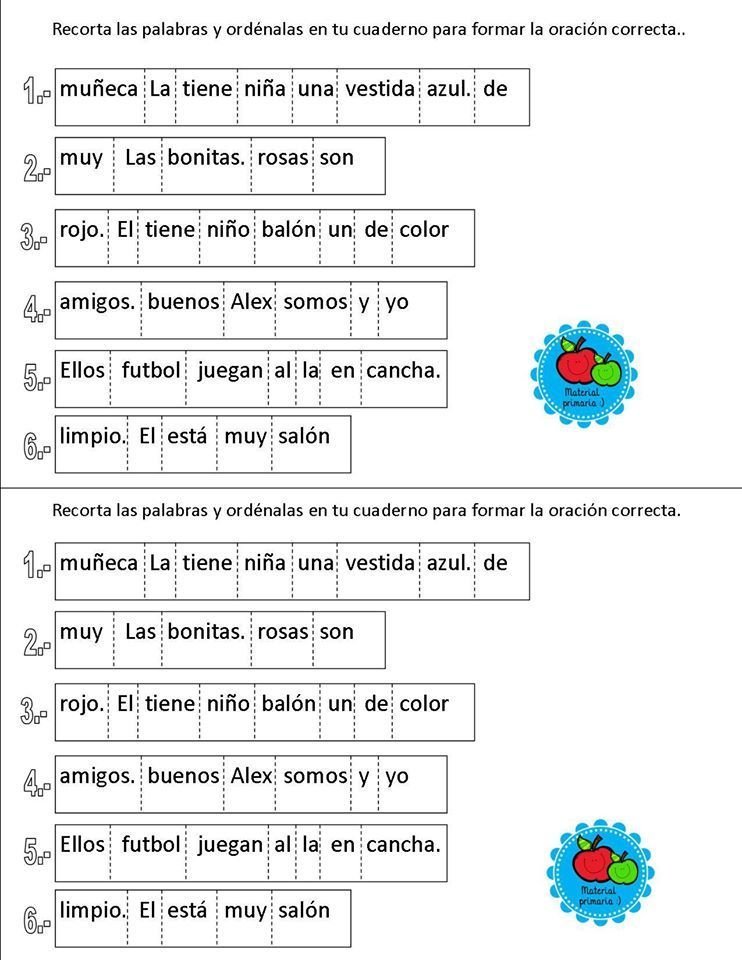
The subtle dance of words on a page might seem straightforward, yet how we join or separate them, what we call 'Unión y Separación de Palabras', profoundly shapes meaning and clarity. Imagine reading a text where "en seguida" (right away) was written as "enseguida" (also right away, but historically different and now often preferred), or worse, "sino" (but, rather) mistakenly became "si no" (if not). These aren't just minor typos; they are decisions about how language constructs its very fabric.
For anyone who writes in Spanish, mastering this aspect of orthography is less about memorizing endless rules and more about understanding the underlying logic that governs how concepts are formed and expressed. It's about ensuring your message is not just understood, but understood precisely.
At a Glance: What You'll Discover Here
- A Peek into History: How word separation, a modern convention, dramatically improved readability.
- The "Why" Behind the Rules: Understanding why joining or separating words isn't arbitrary.
- Navigating Common Traps: Specific examples of words and expressions that frequently cause confusion.
- Your Decision-Making Framework: A practical guide to help you choose correctly in tricky situations.
- Beyond the Basics: How to avoid common pitfalls and keep your writing sharp and professional.
- Your Orthographic Toolkit: Actionable steps to build confidence in your word union and separation choices.
A Curious History: When Words Clung Together
It might shock you to learn that for a significant period, written language didn't bother with spaces between words at all. Picture ancient Greek or early Latin texts, known as scriptio continua (continuous writing). As detailed by the Real Academia Española (RAE), these texts appeared as an unbroken stream of characters, making a modern reader's eyes undoubtedly ache. There were no spaces, no punctuation as we know it, just a compact block of letters that rarely paused.
Why this seemingly inefficient system? Historians suggest a mix of aesthetic, economic, and socio-cultural reasons. A page looked uniform and balanced, and precious writing material was maximized. More importantly, writing was primarily a tool for declamation—texts were meant to be read aloud by trained specialists to an audience. The pauses and word boundaries were supplied by the speaker's voice, not the visual layout. The text found its meaning in being vocalized.
This all began to change around the 6th and 7th centuries AD. Monasteries in Ireland and Britain, whose monks were approaching Latin as a purely written language divorced from their spoken tongue, started to introduce spaces to delimit units of meaning. This revolutionary practice, along with nascent punctuation, slowly spread across Europe. It wasn't until the 12th century that separating words became firmly established in manuscripts, influenced partly by the Arabic culture, where word separation is inherent to Semitic languages and whose scientific translations brought this practice to medieval Europe.
The definitive embrace of spaces and other legibility aids, including those in our Guide to correct writing, really took hold with Renaissance humanism and the invention of the printing press in the 15th century. These innovations transformed reading from a public, vocal activity into a private, silent, and much faster one. The visual clarity provided by spaces between words became indispensable, allowing us to recognize textual units at a glance.
So, while Unión y Separación de Palabras seems like a purely grammatical concern today, its roots lie in a fundamental shift in how humans interacted with written information. It's a testament to the fact that orthography isn't static; it evolves to serve the needs of its readers.
Why Correct Word Union and Separation Matters Today
Fast forward to today, and the correct delimitation of words remains an orthographically crucial task. While most native speakers navigate this intuitively, there are specific instances where doubts arise, leading to common errors. These aren't just pedantic quibbles; they directly impact the clarity, precision, and professionalism of your writing.
Imagine sending a crucial report where a subtle error in word separation alters the intended meaning, or a marketing message that comes across as unpolished. Such mistakes can undermine your credibility, distract your reader, and force them to re-read sentences to grasp your intent. In a world saturated with information, clarity is king, and precision in orthography is a crown jewel. This principle is key to refining your writing style for clarity.
Consider these examples of how a simple space can change everything:
- "A sí mismo" vs. "Asimismo": "A sí mismo" means "to oneself" (e.g., Se preguntó a sí mismo – He asked himself). "Asimismo" means "also" or "likewise" (e.g., Asimismo, se decidió continuar – Likewise, it was decided to continue). Different meanings, different spacing.
- "Sin número" vs. "Sinnúmero": "Sin número" means "without a number" (e.g., La casa sin número – The house without a number). "Sinnúmero" is a noun meaning "a countless number" (e.g., Un sinnúmero de estrellas – A countless number of stars).
These aren't isolated cases. Spanish, like many languages, has evolved specific conventions for when individual elements coalesce into a new, distinct conceptual unit, or when they retain their independent identities while still forming part of a larger phrase. Understanding these distinctions is fundamental to avoiding common grammatical pitfalls and ensuring your message is conveyed with utmost accuracy. It's about more than just avoiding mistakes; it's about mastering the nuances that make your writing effective.
The Tricky Territory: When to Join, When to Split?
The RAE points out that while the basic separation of words is generally automatic, certain "complex forms or expressions" pose a challenge. These are often cases where two or more elements, which might individually be separate words, either merge to form a single, new word, or remain distinct but function as a fixed phrase. The core principle to guide you is often conceptual unity:
- Join words when they truly form a single, indivisible concept, often with a meaning that cannot be derived by simply combining the individual meanings of its parts.
- Separate words when each element retains a degree of independence, even if they habitually appear together as a phrase, or if their individual meanings contribute directly to the phrase's overall sense.
Let's delve into specific categories where this distinction frequently causes headaches, providing practical guidance and examples for each.
I. Adverbs and Adverbial Phrases: A Matter of Evolution
Adverbs and adverbial phrases are prime candidates for confusion. Over time, some phrases have lexicalized, meaning they’ve become single words. Others retain their distinct elements.
Asimismovs.Así mismovs.A sí mismoAsimismo(joined): An adverb meaning "also," "likewise," or "in the same way." This is the most common use.- Example:
Asimismo, se aprobó la propuesta. (Likewise, the proposal was approved.) Así mismo(separated): Can be an adverbial phrase meaning "exactly so" or "in that same way." Less common in modern usage, often replaceable byasimismo.- Example: Respondió
así mismo, sin dudar. (He answered exactly so, without hesitation.) A sí mismo(separated): A prepositional phrase meaning "to oneself." This cannot be joined.- Example: Se dirigió
a sí mismoun consejo. (He gave himself advice.) - Tip: If you can insert another word between
asíandmismo(e.g.,así de este modo mismo), it’s likely two words. If it means "also," useasimismo. Deprisavs.De prisaDeprisa(joined): The standard adverb meaning "quickly." The RAE prefers this.- Example: Corrió
deprisapara alcanzar el autobús. (He ran quickly to catch the bus.) De prisa(separated): Also means "quickly," but is considered less current and stylistic. While not strictly incorrect,deprisais the modern standard.Enseguidavs.En seguidaEnseguida(joined): The preferred adverb meaning "immediately," "right away."- Example: Ven
enseguida, por favor. (Come right away, please.) En seguida(separated): Also means "immediately." Both are considered correct by the RAE, butenseguidais the more common and recommended form.Apartevs.A parteAparte(joined): An adverb meaning "separately," "aside," or "besides." It can also be a noun meaning "a separate section" or an adjective.- Example: Pon los libros
aparte. (Put the books aside.) (Adverb) - Example: Hagamos un
apartepara discutir esto. (Let's make a separate section to discuss this.) (Noun) A parte(separated): A prepositional phrase meaning "to a part" or "to a section."- Example: Fue
a partede la ciudad que no conocía. (He went to a part of the city he didn't know.) - Tip: If you can say "to some part" or "to that part," it's
a parte. Entretantovs.Entre tantoEntretanto(joined): An adverb meaning "meanwhile."- Example:
Entretanto, prepararé la cena. (Meanwhile, I'll prepare dinner.) Entre tanto(separated): A phrase meaning "among so much" or "among so many."- Example:
Entre tantoruido, no podía concentrarse. (Among so much noise, he couldn't concentrate.) - Tip: If it functions purely as a temporal connector, use
entretanto. If it refers to quantity or items, useentre tanto.
II. Conjunctions and Prepositional Phrases: The Nuance of Connection
Connecting words and phrases can introduce subtle differences based on union or separation, particularly with conjunctions and prepositions. Understanding fundamental grammar essentials is key here.
Porqué,Por qué,Porque,Por que: This quartet is a classic source of confusion, representing one of the most challenging aspects ofUnión y Separación de Palabras.Porqué(joined, with accent): A masculine noun meaning "reason" or "motive." It can be plural (los porqués).- Example: No entendía el
porquéde su decisión. (He didn't understand the reason for his decision.) Por qué(separated, with accent): Used in interrogative (direct or indirect) and exclamatory sentences. It means "why?" or "for what reason?"- Example:
¿Por quéno viniste? (Why didn't you come?) - Example: Me gustaría saber
por quélo hiciste. (I'd like to know why you did it.) - Example:
¡Por quécaminos tan bellos! (What beautiful paths!) Porque(joined, no accent): A causal conjunction meaning "because" or "since." It introduces a reason or explanation.- Example: No vino
porqueestaba enfermo. (He didn't come because he was sick.) Por que(separated, no accent): This is the most complex one. It consists of the prepositionporfollowed by either:
- A relative pronoun
que(often replaceable bypor el que,por la que, etc.).
- Example: Esta es la razón
por quete llamé. (This is the reason for which I called you.)
- A subordinating conjunction
quein phrases likeestar por que(to be in favor of something).
- Example: Optaron
por queviniera su hermano. (They opted for his brother to come.) - Tip: If you can insert
el,la,los,lasbetweenporandque, it'spor que. If you're asking a question or expressing surprise, usepor qué. If you're stating a reason, useporque. If it's a noun,porqué. Sinovs.Si noSino(joined): A conjunction used to introduce an alternative or a contrast, often after a negative statement. It can also mean "fate" as a noun (less common).- Example: No fue Juan,
sinoPedro. (It wasn't Juan, but Pedro.) - Example: No solo trabaja,
sinoque estudia. (Not only does he work, but he also studies.) Si no(separated): A conditional clause (si) followed by the negationno. It means "if not."- Example:
Si novienes, me iré solo. (If you don't come, I'll go alone.) - Tip: Try inserting a verb after
si no(e.g.,si no lo haces). If it makes sense, usesi no. Conquevs.Con queConque(joined): An illative (consequential) conjunction, meaning "so," "therefore," or "then."- Example: Tienes hambre,
conquecome algo. (You're hungry, so eat something.) Con que(separated): The prepositionconfollowed by a relative pronounque(replaceable bycon el que,con la que, etc.) or a subordinating conjunctionque.- Example: Este es el cuchillo
con quecortó el pan. (This is the knife with which he cut the bread.) - Example: Basta
con queme lo digas. (It's enough that you tell me.) - Tip: If it's a consequence, use
conque. Ifconandqueeach retain their function (preposition + pronoun/conjunction), usecon que. Tambiénvs.Tan bienTambién(joined): An adverb meaning "also," "too."- Example: Yo
tambiénquiero ir. (I also want to go.) Tan bien(separated):Tan(an adverb of degree) modifyingbien(an adverb of manner or noun). It means "so well" or "as well."- Example: Cantas
tan bien. (You sing so well.) - Tip: If you can substitute "as well," use
tan bien. If it means "in addition," usetambién.
III. Compound Nouns and Adjectives: New Meanings from Old Parts
Many words in Spanish are formed by joining two or more existing words, creating a new conceptual unit. This is part of crafting clear sentence structures.
- Direct Compounds: These are often formed by verb + noun (
sacacorchos- corkscrew), noun + noun (mediodía- midday), or adjective + adjective (agridulce- bittersweet). These are almost always joined. - Examples:
paraguas(umbrella),lavavajillas(dishwasher),bienvenido(welcome). - Prefixes: Prefixes are generally joined directly to the word they modify.
- Examples:
exalumno(former student),vicepresidente(vice president),supermercado(supermarket),antivirus(antivirus). - Exceptions for prefixes: Hyphens are used when the prefix precedes a proper noun, a number, a symbol, or when it would lead to an awkward spelling.
- Examples:
pro-Obama,anti-OTAN,ex-URSS,sub-21. - Important Note: With the RAE's 2010 orthography, many formerly hyphenated prefixes (like
ex-novio) are now written as one word (exnovio), except for the exceptions mentioned above.
IV. Verb Forms and Pronouns: Clitics and Periphrasis
The interaction between verbs and pronouns, particularly clitic pronouns, provides another area where union and separation rules are vital.
- Enclitic Pronouns: These pronouns (
me,te,se,lo,la,le,nos,os,les,los,las) are attached after the verb, forming a single word. This occurs with infinitives, gerunds, and affirmative imperatives. - Examples:
dámelo(give it to me),comprándolo(buying it),hacerlo(to do it),siéntate(sit down). - Proclitic Pronouns: These pronouns appear before the conjugated verb and are always written separately.
- Examples:
Me lo dijo(He told it to me),Se lo compró(He bought it for himself). - Verbal Periphrasis (Verb Phrases): These constructions involve an auxiliary verb and a main verb (often an infinitive, gerund, or participle) that together express a single verbal idea. The components are always written separately.
- Examples:
Voy a comer(I am going to eat),Está lloviendo(It is raining),Tiene que estudiar(He has to study).
V. Expressions of Time, Place, and Manner: Fixed Phrases
Many common expressions that describe time, place, or manner are written as separate words, even though they function as a single conceptual unit. Think of these as fixed phrases that have not (yet) lexicalized into single words. This is an important aspect of mastering punctuation rules.
- Time:
a menudo(often),de repente(suddenly),en cuanto(as soon as),por ahora(for now). - Place:
a la izquierda(to the left),a lo lejos(in the distance),en casa(at home). - Manner:
en balde(in vain),en serio(seriously),de acuerdo(agreed).
While some of these might feel like they should be one word, they maintain their separation according to current RAE guidelines. For instance,de repenteis always two words, neverderrepente.
VI. Special Cases & Recent Changes: Staying Current
Language is dynamic, and orthographic norms can evolve. The RAE periodically updates its rules to reflect current usage or clarify ambiguities. Staying abreast of these changes is part of avoiding common errors in Spanish writing.
- Words that used to be separate: As mentioned,
deprisais an example that has largely supplantedde prisa. Another isapartamentowhich was originallya parte mento. - Words that can be written both ways: Occasionally, the RAE allows for dual spellings, often with a preferred form. When in doubt, consulting the latest RAE
OrtografíaorDiccionariois always the best strategy.
Decision Criteria: Your Orthographic Compass
Navigating the intricacies of Unión y Separación de Palabras doesn't require an encyclopedic memory of every single case. Instead, develop a few guiding principles and a habit of critical thinking.
- Conceptual Unity is Key: Does the combined form express a single, new idea that couldn't be achieved by simply adding the meanings of the individual words?
- Example:
Sacacorchos(corkscrew) is a single, new concept.Saca corchos(he/she/it removes corks) is a verb phrase.
- Does Each Part Retain Independence?: Can the individual words in the phrase stand alone or be modified by other words without changing the fundamental meaning of the phrase?
- Example: In
de repente,deandrepenteare inseparable parts of the adverbial phrase. But ina parte de la ciudad,parteis a noun that can be modified (e.g.,a una parte *nueva* de la ciudad).
- Consult the Authority: When in doubt, the Diccionario de la lengua española (DLE) and the Ortografía de la lengua española from the RAE are your ultimate guides. A quick search can resolve most ambiguities. The RAE website is an invaluable resource.
- Listen to Pronunciation (with caution): While not a foolproof rule, words that are usually joined often have a single stress accent, making them feel like one phonetic unit. However, this is not a substitute for checking the rules, as many separated phrases also flow together in speech.
- Look for Semantic Shifts: If joining words creates an entirely different meaning from separating them, then the distinction is crucial. (e.g.,
porquevs.por qué).
Quick Check Table for Tricky Pairs
| Pair | Joined Form (Meaning) | Separated Form (Meaning) | Tip for Decision |
| :------------ | :---------------------------------------- | :----------------------------------------------------- | :-------------------------------------------------------- |
| Asimismo | Also, likewise | Así mismo / A sí mismo (Exactly so / To oneself) | "Also" =asimismo; otherwise, considerasí mismoora sí mismo. |
| Deprisa | Quickly (preferred) | De prisa (Quickly, less current) | Stick withdeprisafor "quickly." |
| Enseguida | Immediately (preferred) | En seguida (Immediately) |enseguidais more common and recommended. |
| Aparte | Separately, aside; a section (adv./n.) | A parte (To a part/section) | Can you replace "part" with another noun?A parte. Elseaparte. |
| Entretanto| Meanwhile | Entre tanto (Among so much/many) | Is it temporal?Entretanto. Is it about quantity?Entre tanto. |
| Porqué | Reason, motive (noun) | Por qué (Why? - interr./exclam.) | Noun =porqué. Question/exclamation =por qué. |
| Porque | Because (conjunction) | Por que (Preposition + relative/conjunction) | Stating reason =porque. Can you insertel/la?Por que. |
| Sino | But, rather (conjunction) | Si no (If not - conditional) | Conditional clause =si no. Otherwise,sino. |
| Conque | So, therefore (consequential conjunction) | Con que (With which / With that - prep.+pron./conj.) | Consequence =conque. Prep.+pron./conj. =con que. |
| También | Also, too | Tan bien (So well, as well) | "In addition" =también. "So/as well" =tan bien. |
Pitfalls to Avoid & Common Misconceptions
Even with the best intentions, it's easy to fall into certain traps when dealing with word union and separation. Being aware of these common missteps can save you from unnecessary errors and help you in avoiding common grammatical pitfalls.
- Assuming Oral Pauses Dictate Written Separation: This is perhaps the biggest misconception. As the RAE research highlighted, spoken language often perceives a continuous flow of sound. We pause for breath or emphasis, not necessarily at every word boundary. Relying on how you say something to determine how you write it can be misleading, especially with fixed phrases like
de repente(which sounds like one word but is two). - Over-Reliance on Spell Checkers: While useful, automated spell checkers and grammar tools aren't infallible. They often struggle with homophones or phrases where a joined and a separated form are both grammatically correct but have different meanings (e.g.,
asimismovs.a sí mismo). A tool can flag a word it doesn't recognize but might not catch a semantically incorrect but orthographically valid choice. Your understanding of the rules is paramount. - Ignoring Context: The meaning of a phrase almost always dictates its union or separation. Taking words out of context can lead to incorrect choices. Always consider the full sentence and the intended message.
- Believing All Changes Are Arbitrary: While language evolves, changes in orthography are rarely arbitrary. They reflect shifts in usage, efforts to standardize, or attempts to clarify meaning. Understanding this historical and functional aspect makes the rules feel less like arbitrary decrees and more like logical conventions.
- Thinking "Close Enough" Is Fine: While clarity is the primary goal, precision in
Unión y Separación de Palabraselevates your writing. It demonstrates meticulousness and respect for the language, which, in turn, enhances your credibility. In professional or academic contexts, these details matter immensely.
Frequently Asked Questions (FAQs)
"Is there a general rule of thumb for Unión y Separación de Palabras?"
The best general rule is this: If the combined elements form a new, single conceptual unit that cannot be easily understood by the sum of its parts, or if it functions as a single word in a dictionary, it's likely joined. If the elements retain their individual meanings and grammatical functions within a phrase, they are likely separated. Always consider the meaning you intend to convey. When in doubt, default to checking a reliable source like the RAE.
"How do I keep up with changes in Spanish orthography?"
The RAE is the ultimate authority. Regularly consulting their website (rae.es), especially their Diccionario de la lengua española and Ortografía de la lengua española, is the best practice. They publish updates and clarifications, often in response to evolving usage. Following their social media can also keep you informed of major changes or common error reminders.
"Does it really matter if people understand me even if I make a mistake?"
Yes, it absolutely matters. While a reader might eventually decipher your meaning, forcing them to do so introduces friction and can be distracting. Correct Unión y Separación de Palabras ensures instantaneous, unambiguous comprehension. It also signals professionalism, attention to detail, and respect for your audience and the language itself. In any formal or public writing, from academic papers to business emails, precision builds trust and enhances your message's impact. It's an integral part of the crucial role of orthography.
Elevating Your Writing: A Commitment to Precision
Mastering Unión y Separación de Palabras is more than just about avoiding red marks on your papers; it's about embracing the power of precise communication. It's about ensuring your ideas are conveyed with the clarity and elegance they deserve. Every choice you make to join or separate words contributes to the overall coherence and impact of your message, transforming your text from a mere collection of letters into a polished and effective tool.
The journey to orthographic mastery is continuous. Language, as we've seen through its fascinating evolution, is a living entity, always adapting. Your commitment to precision, backed by reliable resources like the RAE, will not only make you a more confident writer but also a more effective communicator in any context. Keep practicing, keep questioning, and keep refining your choices. Your readers, and the integrity of your message, will thank you for it. By honing your skills in this area, you'll be significantly improving your mastering punctuation marks and overall command of the language.