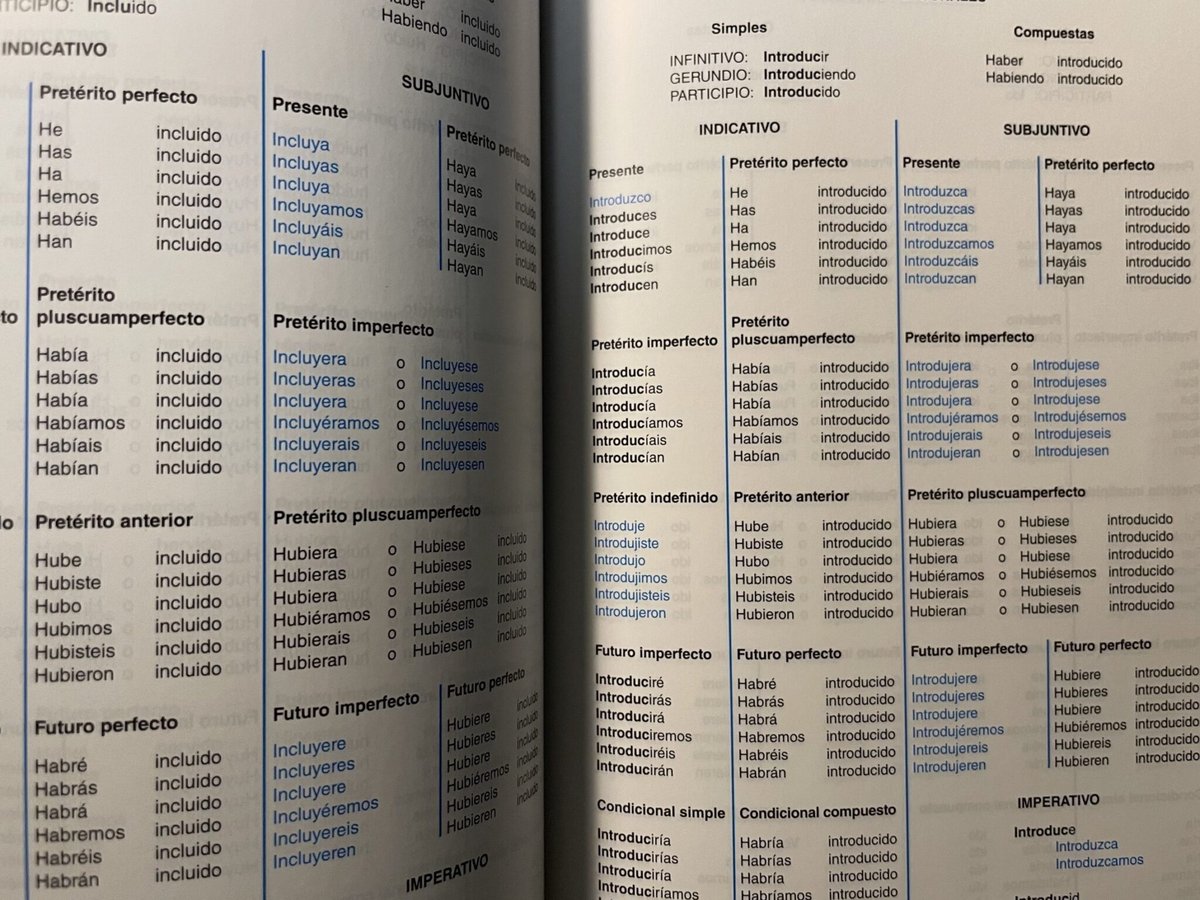
Spanish verbs: They're a beautiful, expressive backbone of the language, but let's be honest, sometimes they feel like they're playing by their own enigmatic rules. If you've ever stared down a verb form and wondered, "Why does it do that?" then you're intimately familiar with the challenge of Conjugación Verbal y Formas Irregulares. Understanding these linguistic curveballs isn't just about memorization; it's about grasping the underlying patterns and exceptions that make Spanish so dynamic.
As a seasoned language coach and journalist, I'm here to demystify these quirks. Forget rote lists and confusing jargon. We're going to break down irregular verbs into digestible, actionable insights, helping you build a more robust, intuitive command of Spanish conjugation.
At a Glance: Mastering Irregular Spanish Verbs
- What are they? Verbs that don't follow the standard conjugation patterns of model verbs like amar (to love), temer (to fear), or partir (to leave/divide).
- Why are they irregular? Their roots, endings, or both change in unpredictable ways, or they can't be conjugated in all tenses and persons.
- How to spot them: Conjugate a verb across key tenses (Present Indicative, Preterite Simple, Future Simple, Conditional Simple, Present Subjunctive, Imperfect Subjunctive, Imperative). Any deviation from the model marks it as irregular.
- Key Patterns: Irregularities often appear consistently across specific groups of tenses (correlations), making them less random than they seem.
- Main Types: Changes can be in vowels (pedir/pido), consonants (hacer/hago), both (caber/quepo), or even entirely different roots (ser/fui).
- Special Cases: Some verbs are "defective," meaning they can't be fully conjugated, only appearing in certain persons or tenses (e.g., llover).
- What NOT to confuse: Regular orthographic (spelling) changes (like c to qu before e or i, as in tocar -> toqué) are not considered true irregularities, as they follow consistent spelling rules to maintain pronunciation.
The Heart of the Matter: What Makes a Verb "Irregular"?
Every Spanish verb is fundamentally built from two core components:
- The Root (La Raíz): This is the semantic core, carrying the verb's essential meaning. Think cant- in cantó (sang).
- The Ending (La Desinencia): This suffix provides all the grammatical information – who performed the action (person), how many (number), when it happened (tense), the speaker's attitude (mood), and whether the action is complete (aspect). Think -ó in cantó.
Regular vs. Irregular: A Clear Divide
Regular verbs are the diligent, predictable students of the Spanish language. They follow uniform conjugation rules, perfectly mirroring the model verbs for each of the three conjugations (-ar, -er, -ir). Crucially, their root remains steadfastly unchanged across all conjugations, and their endings adjust predictably. Examples include aceptar (to accept), comer (to eat), and discutir (to discuss).
Irregular verbs, on the other hand, are the rebels. Their conjugations deviate from these established models. This departure can manifest as changes within their root, their ending, or sometimes, a combination of both. You might find a vowel shifting, a consonant appearing or disappearing, or even an entirely different root popping up in certain tenses. Classic examples include hacer (to do/make), ir (to go), perder (to lose), acertar (to hit the mark/guess correctly), and poder (to be able to).
The unpredictable nature of these verbs is precisely what makes them challenging, yet also what adds richness and nuance to Spanish.
Your Diagnostic Toolkit: How to Spot an Irregular Verb
Identifying an irregular verb isn't a mystical process; it's a systematic one. You don't need a crystal ball, just a solid understanding of a few key conjugations. The trick is to test a verb against the expected patterns in specific, diagnostic tenses.
Here's your go-to "Conjugation Test":
- Conjugate the verb in the following key tenses and moods:
- Present Indicative (Presente de Indicativo): "I speak, you speak..."
- Preterite Simple Indicative (Pretérito Perfecto Simple de Indicativo): "I spoke, you spoke..."
- Future Simple Indicative (Futuro Simple de Indicativo): "I will speak, you will speak..."
- Conditional Simple (Condicional Simple): "I would speak, you would speak..."
- Present Subjunctive (Presente de Subjuntivo): "That I speak, that you speak..."
- Imperfect Subjunctive (Pretérito Imperfecto de Subjuntivo): "That I spoke/would speak..."
- Imperative (Imperativo): "Speak! (You singular/plural)"
- What to look for:
- Root Changes: Does the stem of the verb (the part before the -ar, -er, or -ir ending) alter from its infinitive form? For instance, tener (to have) becomes tengo (I have). The 'e' in 'ten-' changes to 'ie' in forms like tienes (you have), or a 'g' appears.
- Ending Changes: Do the endings diverge from the standard model endings for that tense and person? For example, in the first person singular of the Present Indicative, ser (to be) becomes soy, not so.
- Incomplete Conjugation: Can the verb even be conjugated in all persons and tenses? If not, it's a "defective" verb, a specific type of irregular verb we'll explore later.
If you observe any changes in the root, the ending, or both, or if the verb simply doesn't exist in a particular form, congratulations – you've identified an irregular verb. This systematic approach saves you from having to guess or memorize every single verb form from scratch.
Unmasking the Patterns: The Three Core Irregularity Correlations
While irregular verbs might seem like a chaotic free-for-all, there's often a hidden order to their madness. Many irregularities don't just pop up randomly in one isolated form; they tend to appear correlatively across certain groups of tenses. Understanding these "correlations" is a powerful shortcut, allowing you to predict irregularities in multiple forms once you know one.
Think of it like this: if you know one piece of a puzzle, these correlations give you clues to adjacent pieces.
Correlation 1: The Present Tense Trio
This is perhaps the most frequent and useful correlation. If a verb is irregular in the Present Indicative, it's highly likely to exhibit similar irregularities in the Present Subjunctive and the Imperative moods. This makes sense, as the Present Subjunctive and most forms of the Imperative are often derived directly from the first person singular of the Present Indicative.
- Example: Venir (to come)
- Present Indicative (1st P.S.): Yo vengo (I come) — Notice the 'g' and 'e' -> 'e' change from 'venir'.
- Present Subjunctive: Que yo venga, que tú vengas, que él/ella venga, etc. (That I come...) — The 'g' and 'e' -> 'e' persist.
- Imperative: ¡Ven tú! (Come! - informal singular), ¡Vengan ustedes! (Come! - formal plural) — The irregularities often carry through, especially the root change.
Correlation 2: The Past and Hypothetical Group
This correlation links irregularities in the Preterite Simple Indicative (the simple past, "I came"), the Imperfect Subjunctive ("that I came/would come"), and the Future Subjunctive (less common in modern speech, "if I were to come"). If a verb is irregular in its Preterite stem, those irregularities will typically be mirrored in the other two tenses.
- Example: Venir (to come)
- Preterite Simple Indicative (1st P.S.): Yo vine (I came) — The 'e' of 'venir' changes to 'i'.
- Imperfect Subjunctive: Que yo viniera / que yo viniese (That I came/would come) — The 'i' from the Preterite root carries over.
- Future Subjunctive: Si yo viniere (If I were to come) — Again, the 'i' root is present.
Correlation 3: The Future and Conditional Pair
This correlation is straightforward: if a verb has an irregular stem in the Future Simple Indicative ("I will come"), that same irregular stem will be used for the Conditional Simple ("I would come"). Often, these irregularities involve either dropping a vowel, adding a consonant, or both, to create a new, often shortened, stem.
- Example: Venir (to come)
- Future Indicative: Yo vendré (I will come) — The 'e' in 'venir' is replaced by 'd' and fused with the ending.
- Conditional Simple: Yo vendría (I would come) — The same 'vendr-' stem is used.
By understanding these correlations, you're not just learning isolated forms, but entire families of conjugated verbs. It's a foundational step towards recognizing and predicting irregular verb forms rather than just endlessly memorizing them.
A Deep Dive into Irregularities: By Type of Phonetic Change
Irregularities aren't random; they often fall into categories based on the phonetic changes occurring in the verb. This allows us to group and understand them better.
1. Vocalic Irregularities (Alternancia Vocálica)
These are arguably the most common type, involving changes within the verb's vowels, often resulting in diphthongs (two vowels pronounced as one sound) or simple vowel shifts.
- e/i -> ie (Diphthongization): This is a very frequent change, especially in the present tenses.
- Perder (to lose) -> pierdo, pierdes, pierde, pierden. (The 'e' in perder becomes 'ie' in the present indicative and subjunctive, except for nosotros/vosotros).
- Adquirir (to acquire) -> adquiero, adquieras. (The 'i' in adquirir becomes 'ie').
- Entender (to understand) -> entiendo, entiendes. (The 'e' in entender becomes 'ie').
- o/u -> ue (Diphthongization): Another common diphthongization.
- Jugar (to play) -> juego, juegas. (The 'u' in jugar becomes 'ue').
- Soñar (to dream) -> sueño, sueñas. (The 'o' in soñar becomes 'ue').
- e -> i (Vowel Shift): A single vowel changes to another. These often occur in -ir verbs, particularly in the present tenses, but also in the preterite and subjunctive.
- Pedir (to ask for) -> pido, pides. (The 'e' in pedir becomes 'i').
- Medir (to measure) -> mido, midas. (The 'e' in medir becomes 'i').
- Corregir (to correct) -> corrigió, corrigieron. (The 'e' in corregir changes to 'i' in the 3rd person singular and plural preterite, and throughout the imperfect subjunctive).
- o -> u (Vowel Shift): Similar to the e->i shift, but with 'o' changing to 'u'. Often seen in -ir verbs in the preterite and imperfect subjunctive.
- Dormir (to sleep) -> durmieron (they slept), durmiera (that I slept/would sleep). (The 'o' in dormir becomes 'u').
- Morir (to die) -> murieran (that they died/would die). (The 'o' in morir becomes 'u').
2. Consonantal Irregularities (Alternancia Consonántica)
These irregularities involve changes, additions, or deletions of consonants within the verb's root.
- Addition of z or g (especially in 1st P.S. Present Indicative):
- Deducir (to deduce) -> deduzco (I deduce). (The 'c' becomes 'zc').
- Salir (to leave) -> salgo (I leave), salgas (that you leave). (A 'g' is added).
- Hacer (to do/make) -> hago (I do/make). (A 'g' is added).
- Change of e or i to d in Future/Conditional Stem: This specific change usually involves irregular stems for the future and conditional tenses.
- Valer (to be worth) -> valdría (it would be worth). (The 'e' is dropped, and a 'd' is inserted).
- Venir (to come) -> vendrán (they will come), vendrían (they would come). (The 'e' is dropped, and a 'd' is inserted).
- Elimination of Vowel and/or Consonant in Future/Conditional Stem: Another type of irregularity in the future and conditional stems, often leading to a shorter form.
- Hacer (to do/make) -> harían (they would do/make). (The 'ce' is dropped, leaving 'ha-').
- Poder (to be able to) -> podrán (they will be able to). (The 'e' is dropped, creating 'podr-').
- Addition of ig:
- Caer (to fall) -> caigo (I fall), caigas (that you fall).
- Traer (to bring) -> traigo (I bring), traigan (that they bring).
3. Mixed Irregularities (Alternancia Mixta)
As the name suggests, these verbs exhibit changes in both vowels and consonants within their roots. They are often among the most complex irregular verbs.
- Maldecir (to curse) -> maldigo (I curse), maldiga (that I curse). (The 'e' changes to 'i' and a 'g' is added).
- Caber (to fit) -> quepo (I fit). (The 'c' becomes 'qu' and the 'a' becomes 'e', alongside other changes).
4. Heteroclite Verbs (Verbos Heteróclitos)
These are the linguistic chameleons, verbs whose different tenses are formed using entirely independent and distinct roots. They often come from different historical Latin roots merging into one verb.
- Ser (to be): soy (I am), fui (I was - preterite), era (I was - imperfect).
- Ir (to go): voy (I go), fui (I went - preterite, identical to ser!), iba (I was going - imperfect).
These verbs require direct memorization for each different root, as they don't follow predictable patterns from their infinitive.
Beyond the Root: Irregularities in Verb Endings
While root changes are common, sometimes the irregularity lies purely in the desinence, or ending, of the verb. These are less frequent but equally important to recognize.
- Addition of y in the First Person Singular Present Indicative:
- Ser (to be) -> soy (I am).
- Ir (to go) -> voy (I go).
- Estar (to be/to be located) -> estoy (I am/I am located).
This y replaces the expected standard ending for -er/-ir verbs (like -o) or introduces an entirely new structure. - Change of i to y in Third Persons of the Preterite Simple and Imperfect Subjunctive: This occurs in verbs where the verb's stem ends in a vowel, and the ending normally starts with an i. To avoid two i's or an awkward pronunciation, the i transforms into a y.
- Creer (to believe) -> creyó (he/she/it believed), creyeron (they believed), creyera (that he/she/it believed/would believe).
- Caer (to fall) -> cayó (he/she/it fell), cayeran (that they fell/would fall).
- Oír (to hear) -> oyó (he/she/it heard), oyéramos (that we heard/would hear).
These ending-specific irregularities highlight that "irregular" isn't always about a dramatically altered root; sometimes it's a subtle but consistent shift in the suffix.
When Both Change: Root and Ending Irregularities
Some of the most challenging irregular verbs are those that combine changes in both their root and their ending, particularly in the Preterite Simple tense. These verbs often take on completely distinct forms that bear little resemblance to their infinitive.
In many of these cases, the verb's root undergoes a vowel or consonant shift, and the traditional Preterite endings (-é, -aste, -ó, -amos, -asteis, -aron for -ar verbs; -í, -iste, -ió, -imos, -isteis, -ieron for -er/-ir verbs) are replaced by a unique set of irregular endings, especially in the first and third person singular. These irregular preterite endings often look like: -e, -iste, -o, -imos, -isteis, -ieron (for -er/-ir type irregulars).
Here are some prime examples:
- Conducir (to drive):
- Infinitive root: conduc-
- Preterite forms: conduje (I drove), condujiste (you drove), condujo (he/she/it drove), condujimos (we drove), condujisteis (you all drove), condujeron (they drove).
- Here, the 'c' in the root changes to 'j', and the endings are the special irregular set (e.g., -je, -jo, -jeron instead of -cí, -ció, -cieron).
- Andar (to walk):
- Infinitive root: and-
- Preterite forms: anduve, anduviste, anduvo, anduvimos, anduvisteis, anduvieron.
- The 'a' in the root changes to 'u', and a 'v' is added, combined with the irregular endings.
- Saber (to know):
- Infinitive root: sab-
- Preterite forms: supe, supiste, supo, supimos, supisteis, supieron.
- The 'a' in the root changes to 'u', and the 'b' is replaced by 'p', plus the irregular endings.
Other common verbs following this dual-change pattern in the preterite include decir (dije), hacer (hice), poder (pude), poner (puse), querer (quise), tener (tuve), traer (traje), and venir (vine).
Mastering these particular preterite forms is crucial because they are high-frequency verbs, and their unique conjugations often serve as the stem for the Imperfect Subjunctive as well, as we saw in the correlation section.
The Unfinished Story: Defective Verbs
Beyond the typical irregular verbs that simply bend the rules, there's a special category known as defective verbs (verbos defectivos). These verbs are "defective" because they don't have a complete conjugation paradigm; they can only be conjugated in a limited number of persons, tenses, or moods. This isn't due to a phonetic change, but rather due to their meaning, which often restricts their use.
Understanding defective verbs helps prevent the frustration of trying to conjugate a verb in a form that simply doesn't exist or isn't grammatically sensible.
1. Unipersonal Verbs (Verbos Unipersonales)
These verbs refer to phenomena that naturally occur impersonally and thus are almost exclusively conjugated in the third person singular. They describe weather or natural events.
- Examples:
- Llover (to rain): Llueve (It rains), Llovió (It rained), Lloverá (It will rain). You wouldn't say "yo lluevo" (I rain).
- Nevar (to snow): Nieva (It snows), Nevó (It snowed).
- Tronar (to thunder): Truena (It thunders).
- Amanecer (to dawn): Amanece (It dawns).
- Anochecer (to get dark): Anochece (It gets dark).
2. Bipersonal Verbs (Verbos Bipersonales)
This term can be a bit misleading as "bipersonal" usually implies two persons, but in Spanish grammar, it generally means verbs that conjugate only in third persons (singular and plural). These verbs often describe events, occurrences, or impersonal states.
- Examples:
- Suceder (to happen/occur): Sucede (It happens), Suceden (They happen), Sucedió (It happened), Sucedieron (They happened).
- Ocurrir (to occur): Ocurre (It occurs), Ocurrieron (They occurred).
- Convenir (to be advisable/suitable): Conviene (It is advisable), Convino (It was advisable).
- Acaecer (to happen, a more formal synonym for suceder): Acaece (It happens).
3. Verbs of Limited Conjugation
These verbs can be conjugated in all persons but are restricted to only certain verbal tenses or moods. Their meaning often makes them unsuitable for other tenses.
- Examples:
- Soler (to usually do something/be accustomed to): This verb primarily exists in the Present and Imperfect Indicative, and occasionally in the Present Subjunctive. It's used to express habitual actions.
- Suelo ir al gimnasio. (I usually go to the gym.)
- Solíamos cenar tarde. (We used to dine late.)
You won't find it in the Preterite, Future, or Conditional, as expressing a "habit" in those tenses doesn't align with its core meaning. - Acostumbrar (to be accustomed to): Similar to soler, this verb is most common in the Present and Imperfect Indicative.
- Acostumbro leer antes de dormir. (I'm accustomed to reading before sleeping.)
Recognizing defective verbs helps you avoid trying to force them into forms that simply don't make sense or aren't used by native speakers.
Dispelling Myths: What Isn't an Irregularity?
One common pitfall for Spanish learners is mistaking systematic orthographic (spelling) changes for genuine verb irregularities. It's crucial to understand the distinction: orthographic changes occur purely to maintain the consistent pronunciation of a verb's root, following standard Spanish spelling rules, whereas true irregularities involve a fundamental shift in sound or structure not dictated by these rules.
These spelling adjustments are entirely predictable and regular, even if they make the verb look different on paper.
Here are the most common "non-irregular" orthographic changes:
- c -> qu before e or i: This happens with -car verbs in forms where the ending starts with 'e'.
- Tocar (to touch) -> toqué (I touched - Preterite). If it were tocé, it would be pronounced differently (like 'th' in 'thin').
- Buscar (to look for) -> busqué (I looked for).
- g -> gu before e or i: This applies to -gar verbs.
- Llegar (to arrive) -> llegué (I arrived). If it were legé, the 'g' would soften to a 'h' sound.
- Pagar (to pay) -> pagué (I paid).
- z -> c before e or i: This is for -zar verbs.
- Empezar (to begin) -> empecé (I began). If it were empezé, the 'z' sound would be maintained, but standard Spanish orthography requires 'c' before 'e'/'i' for that sound.
- Lanzar (to throw) -> lancé (I threw).
- gu -> güe/güi (for verbs like averiguar): To maintain the pronunciation of the 'u'.
- Averiguar (to find out) -> averigüé (I found out - Preterite), averigüen (that they find out - Present Subjunctive). Without the dieresis (¨), 'gue' would be pronounced 'ge'.
- g -> j before a or o (for verbs ending in -ger/-gir): To maintain the 'h' sound.
- Recoger (to pick up) -> recojo (I pick up - Present Indicative). If it were recogo, the 'g' would be a hard 'g' sound.
- Dirigir (to direct) -> dirijo (I direct).
These are not true irregularities because the underlying phonetic structure of the root remains consistent; only the spelling changes to reflect standard pronunciation rules. When you encounter hice (from hacer) versus hizo, or sigo (from seguir) versus sigue, the 'c/z' and 'g/gu' changes are about maintaining sound, not altering the verb's inherent structure beyond what orthography demands.
Strategies for Taming Irregular Verbs
Navigating the landscape of irregular verbs might feel like an endless trek through a linguistic jungle, but with the right map and tools, you can not only survive but thrive. Here are some actionable strategies to help you master these vital forms:
- Embrace Contextual Learning: Don't just memorize conjugations in isolation. See and use irregular verbs in sentences, conversations, and real-world scenarios. This helps solidify their usage and makes them feel more natural. Read, listen, and speak as much as possible, paying close attention to how irregular verbs are deployed.
- Group by Correlation and Type: Instead of learning verbs one by one, group them by the types of irregularities we discussed. If you know a verb has an e->ie stem change, try to identify other verbs with the same change. Likewise, practice the three correlation groups together. This pattern recognition makes the task feel less daunting.
- Prioritize High-Frequency Verbs: Some irregular verbs are far more common than others. Focus your efforts on mastering the conjugations of verbs like ser, estar, ir, tener, hacer, poder, poner, saber, querer, decir, venir, and ver first. These are your foundational building blocks for daily communication.
- Flashcards and Spaced Repetition: For sheer memorization of specific forms (especially the heteroclite verbs like ser and ir), flashcards are invaluable. Use a spaced repetition system (like Anki or similar apps) to optimize your review schedule, ensuring you revisit challenging verbs at optimal intervals.
- Practice, Practice, Practice: There's no substitute for consistent practice.
- Drills: Use online conjugation trainers.
- Writing: Incorporate irregular verbs into your journaling, emails, or creative writing. To truly master Spanish, especially its trickier elements like irregular verbs, it's essential to continually refine your overall language skills. For instance, understanding how to construct sentences correctly is fundamental, and you can always Learn how to write with confidence by improving your foundational grammar.
- Speaking: Actively try to use them in conversations. Don't be afraid to make mistakes – that's how you learn!
- Create Your Own Conjugation Charts: Sometimes, the act of writing out the full conjugation for a challenging verb yourself can help it stick. Use different colored pens for the root and ending to visualize changes.
FAQs: Your Quick Answers to Common Irregular Verb Questions
Are there rules for predicting irregular verbs?
Unfortunately, no definitive "rules" exist to predict which verbs will be irregular. Many irregularities are remnants of Latin verb forms or historical phonetic shifts. However, once a verb is identified as irregular, the correlations we discussed (like Present Indicative -> Present Subjunctive -> Imperative, or Future -> Conditional) provide highly predictable patterns for its other irregular forms. Also, certain patterns (like stem changes e->ie or o->ue) are common enough to make educated guesses in context, but you still need to verify.
Which are the most common irregular verbs in Spanish?
The most frequently used irregular verbs are often those that describe fundamental states, actions, or movements. A core list includes:
- Ser (to be)
- Estar (to be)
- Ir (to go)
- Tener (to have)
- Hacer (to do/make)
- Poder (to be able to)
- Poner (to put)
- Saber (to know)
- Querer (to want)
- Decir (to say/tell)
- Venir (to come)
- Ver (to see)
- Dar (to give)
Mastering these verbs will unlock a vast amount of communication in Spanish.
Is it always obvious if a verb is irregular?
Not always immediately, especially for new learners. Some verbs have very subtle irregularities, or only become irregular in certain persons or tenses. This is why the "Conjugation Test" across multiple key tenses is so important. By systematically checking for root, ending, or missing forms, you'll uncover even the trickiest irregularities. Over time, with exposure and practice, many irregularities will become second nature and recognizable almost instantly.
Your Next Steps to Conjugation Mastery
The journey to mastering Conjugación Verbal y Formas Irregulares is a marathon, not a sprint. It requires patience, consistent effort, and a willingness to embrace the quirks of the language. But here's the good news: every irregular verb you conquer strengthens your foundation, builds your confidence, and makes your Spanish more fluid and natural.
Don't aim for perfection overnight. Instead, focus on understanding the underlying mechanisms of irregularity, leveraging the correlations, and prioritizing the most common verbs. Integrate your learning into daily practice – read, write, listen, and speak. Celebrate each irregular verb you tame, and remember that even native speakers sometimes pause to consider a tricky conjugation.
With this guide, you now have the tools and insights to approach irregular verbs not as insurmountable obstacles, but as fascinating features of the Spanish language. Keep practicing, stay curious, and you'll soon find yourself conjugating with confidence and clarity. ¡Adelante!